Updated 11 November 2026
Menstruation and society’s attitude
I have been working among women for several years, and I have noticed that menstruation has long been medicalised. What does that mean? That gynaecologists generally regard it as a problematic phenomenon, sometimes even as unnecessary, despite its being physiological. We women have become accustomed to trusting doctors because it is easier than taking an interest and piecing together information about our bodies like a puzzle. It is not menstruation itself, but society’s approach to it that is pathological, leading women over several decades to fall into the false belief that they cannot be experts on their own health and must constantly entrust themselves to someone else’s care. Yet menstruation has been, is, and I hope always will be a natural expression of womanhood that accompanies us throughout our reproductive lives. Only a woman herself grows within her body and knows it best, which makes her the true expert on her health. If women were encouraged to take responsibility for their health, I believe there would be fewer lifestyle diseases, or rather fewer women suffering from them.
For change to happen, women should realise how important it is to pay attention to their menstruation and their cycle as a whole. And even without a degree in biology, they have enough information and experience.
Healthy and normal menstruation
If you want to learn something about your body, educate yourself and observe your cycle and menstruation. You will discover that we need to distinguish between a healthy and a normal menstrual cycle or period. Healthy menstruation is menstruation that does not hurt or leave us unable to function. Normal menstruation, on the other hand, may be painful, include blood clots, be preceded by spotting, and so on. Gynaecologists say this pattern is normal because they do not know natural prevention techniques. Most gynaecologists are also men. They have never had an aching ovary during ovulation, a ruptured cyst, premenstrual irritability or a period, so surely they cannot make sweeping judgements about women’s nature. For years, I thought my menstruation was normal, until I discovered that it could be completely different — healthy. And that this health reflects how I treat myself.

By paying attention to ourselves, we express respect and appreciation for our bodies, which we cannot see inside but which communicate with us through their manifestations. Important means of communication include the length and course of menstruation, temperature, mucus and discharge, cycle length, pain and mood. If we are attentive to ourselves, we have an opportunity to see connections in our body’s manifestations and learn to respond to them. Knowing your body and caring for it can be a way to prevent possible gynaecological difficulties, unwanted pregnancy or menstrual pain.
A monthly ritual and the menstrual cycle
When you get out of bed in the morning, you make it so that it is ready for the evening. When you finish eating, you wash your plate before the food dries onto it. When your clothes get dirty, you wash them because you feel better in clean clothes. When your period ends, you boil your menstrual cup ready for next month. You surely understand what I am getting at? That it is important to tidy up inside your body after menstruation and prepare it for a new cycle.
This could take the form of a regular monthly ritual, as it does for me. Whenever I boil my cup, I also boil herbs for vaginal herbal steaming in another pot.

Every month, a new lining forms in our bodies, which a fertilised egg needs for implantation. The whole process is controlled by hormones, but it is also influenced by the nervous system’s response to external stimuli. The more mental and physical discomfort we experience, the more likely the body’s rhythm is to be disrupted. Unless, of course, we take hormonal contraception, which appears to regulate the cycle but actually switches it off completely.
We menstruate too often and for too long. On average, 400 times in a lifetime. So many periods without subsequent care physically exhaust our bodies, which is why they need support. Women once had more children, breastfed for longer, and their bodies were cautious because of greater physical exertion, keeping fertile cycles in check. Today, the number of women suffering from diseases connected with menstruation and disorders of the hormonal system is increasing. We are gradually losing our natural fertility. That alone is enough for each of us to consider whether we are really doing enough when we do nothing for ourselves.
We tend to visit a gynaecologist with a common menstrual problem and leave with a prescription for contraception. It is prescribed not only to prevent conception, but also as a treatment for gynaecological problems or hormonal fluctuations. Yet this is precisely the stumbling block that pushes menstruation as a natural phenomenon into the background. Contraception creates an apparent cycle in which the ovaries and uterus hibernate. The cycle is not controlled by the pituitary gland and hormones from the ovaries or corpus luteum, but by little hormonal pills. It is important to know that menstruation does not occur. No egg matures, no lining grows, and withdrawal bleeding merely creates the appearance of a period. The body sleeps, sometimes so deeply that it can be difficult to wake it when, at thirty, you decide you are ready to have children.
If we do not use hormonal contraception and the egg is not fertilised, the body cleanses itself repeatedly. It cannot happen any other way, which is why we speak of a cycle. The course and length of menstruation reflect the condition of the uterus and ovaries. But also the amount of uterine lining, gynaecological difficulties of various kinds, early miscarriages, the number of pregnancies and births, stress, and so on. These nuances give monthly bleeding different lengths and patterns, expressing the condition and health of the female reproductive organs. Let us regard menstrual bleeding as information.
From a biological perspective, the entire upper layer of the endometrium should be shed during menstruation. It dies as blood vessels constrict under the influence of falling progesterone. A wound forms, bleeds and causes the uterine lining to detach. Although this is a natural process, it is still bleeding like any other.
Care during menstruation
What does a person do when they are bleeding? Run? Jump? Carry on as normal? Hardly. One of the biggest myths about menstruation is that a woman can do everything she normally does during her period. With all due respect to others, a woman should first be kind and attentive to herself during these days, and only then to those around her. She should slow down, lie down and not rush after anything. She should choose menstrual products very carefully to suit her own needs. Free menstruation is great too. I used tampons for years, but now my body no longer wants them, so neither do I. I listen to myself, respond, and use a cup and, more recently, period underwear.

Steaming before and after menstruation
The uterus needs consideration and care during and after menstruation. It is wounded and regenerating. To regenerate, the female body needs rest and warmth. Herbal steaming increases thermal comfort in the pelvic area. After menstruation, it increases circulation in the uterus and ovaries and heightens awareness of the place where our emotions are hidden — the pelvic floor. It is an effective technique that allows us to tidy up inside after menstruation. And to release tension before menstruation.
Before menstruation, the body literally asks for attention through PMS, spotting and pain. Surprisingly, however, we tend to ignore even pain and consider it normal. We suppress it with Ibalgin, which has become a commonly used menstrual aid. It numbs the body and stops it from communicating. I understand that it brings relief, but regularly every month?
Should menstruation really hurt as divine punishment for Eve taking a bite of the apple? Are synthetic hormones or painkillers the answer? Why does a physiological — that is, natural — process of the female body hurt?
Because this is how our body communicates. It calls for help, and we do not understand its language. We do not know the language of our bodies because we have a pink pill and, above all, a heap of traditional nonsense about a certain amount of discomfort and pain being part of menstruation. We pass this on to our daughters too.
But listen!!! We are not victims of our womanhood! Not at all! Being able to be openly cyclical is a gift. Our cycle teaches us to work with ourselves and literally observe the seasons within us. Our emotions, sensitivity, perception — our entire femininity — are deeply connected with the functioning of our female reproductive organs, which mature from birth and gradually lose their function as we age. That is another reason why it is important to begin caring for them even before their functions develop, and to continue into old age, when natural vaginal lubrication and hormone production decline.
When we listen to ourselves and care for ourselves from the heart, rather than just for appearances, we will change society’s view of menstruation. And above all, we will change our attitude towards our own bodies.
Vaginal flora and regular steaming
I often read self-justifying opinions from “experts” saying that we do not need to help the body in any way. For example, regarding the vagina’s self-cleaning function, which maintains an acidic pH and prevents bacterial overgrowth. I have heard the opinion that steaming disrupts this natural flora. That is not true. Steaming is too gentle to upset vaginal pH. It does, however, increase circulation in the vagina and support the activity of glands that produce secretions important for our bodies to function. It dissolves thick pathological discharge by warming the relevant areas and helps it leave the body. Just as when you steam your sinuses during a cold.
I know what I am talking about. Regular steaming helped me get rid of recurring yeast infections. This is therefore not about disrupting the body’s balance, but supporting its proper functioning.

So let us learn to settle down during menstruation, slow our pace and bring warmth into the body. Wrap ourselves in a shawl. Lie down and make raspberry leaf or yarrow tea. Put no pressure on ourselves during this phase. Respond confidently to a request: “Sorry, not today. I am menstruating.” After menstruation ends, support the regeneration of the uterus and clear it of remnants that should have left long ago. Vaginal steaming is perfect for this as a regular monthly ritual. It is not invasive; it is gentle, simple and pleasant. If you follow the basic rules, you cannot harm yourself — quite the opposite.

How often to steam and which blend to choose
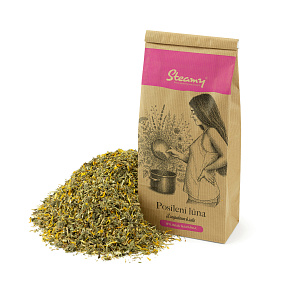
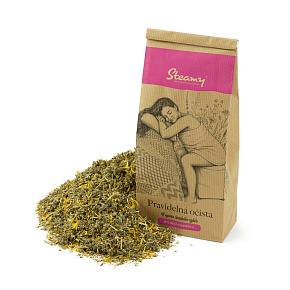
You may now be wondering how often and when to steam as part of the regular monthly cleansing I am writing about. But I will give you a slightly playful answer, in keeping with the message running through this whole article: “Listen to your inner voice.” If you have no gynaecological problems, start at least once before menstruation and once afterwards. As for your sensitivity to warmth, which informs the recommendation for how long to sit over the steam, read the article How Long Should You Sit Over the Steam? For cycles shorter than 28 days, choose the Womb wellness herbal blend; for longer cycles, choose Periodic Cleanse. But also steam according to how you feel throughout the cycle, and notice the changes. Steam before making love — now that is something.
Guides and consultations
If you are unsure about the practical side of steaming, take a look at the article How to Enjoy Vaginal Herbal Steaming or watch the video How to Get Started.
If you have gynaecological problems and are unsure whether steaming is suitable, or you would like a consultation, email me at monika@steamy.cz. I will try to advise you.
Be attentive to yourselves
With love...

Mgr. Monika Valová