How often and when should you steam? What will you feel while sitting over the steam?
Plan your herbal steaming for the days when you feel pain or discomfort in your lower abdomen. The warmth rising from below helps prepare you for a calmer period in the days before menstruation. During this time, steam for 3–5 consecutive days, or until your period begins. Regular steaming may help with painful bowel movements or help you relax before making love and enhance your experience.
Steam with the Endometriosis Relief blend twice a week, depending on how you feel, or specifically around the days that cause you difficulties. Find your own rhythm that works for you. Do not steam during menstruation.
Steaming helps your body get blood flowing in the pelvic area, nourishing it in the process. If you do not feel the same desire for warmth in summer as you do in winter, try steaming with the steam rising freely, without wrapping yourself in a blanket. This has its own charm too — in the morning or evening, when it is not hot yet or is no longer hot. After steaming, you can rinse yourself with lukewarm water, which is very refreshing and pleasant, as the external cooling intensifies the feeling of warmth inside.
In winter, remember to wear warm socks and, as well as sealing in the steam around your waist, drape a blanket over your shoulders for greater warmth and comfort.
After steaming, lie down for at least 30 minutes and let the warmth spread through your body. In the evening, you will drift off to sleep beautifully.
Think of steaming as an at-home wellness ritual, rather than a treatment. It is a balneological procedure that uses hydrotherapy, thermotherapy, aromatherapy and phytotherapy, and its main purpose should be to help you connect with your body and relax.
As a complement to steaming, you can use the cooled herbal decoction for rinsing, or use the herbal blend to prepare various types of baths.
A little about endometriosis
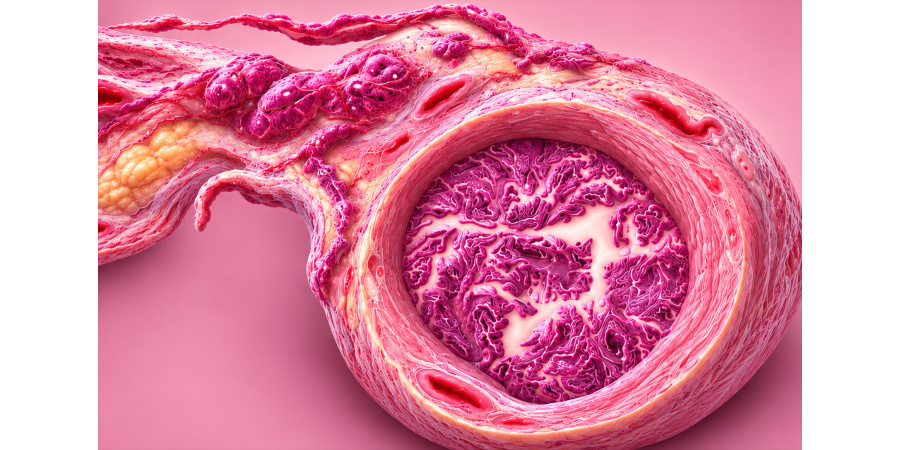
Endometriosis is a chronic condition in which tissue similar to the lining of the uterus is found outside the uterus, where it can cause an inflammatory response, pain, lesions and adhesions. It affects approximately 10% of women of reproductive age. Its symptoms differ among the women who contact me, but they all share physical pain and the determination to face it bravely.
Is heat suitable for chronic aseptic inflammation?
It is more than suitable. Research confirms this too. A new review from 2026 states that superficial heat therapy involves mechanisms including vasodilation, changes in microcirculation, muscle relaxation and modulation of pain perception; evidence of the pain-relieving effects of heat therapy has been described for endometriosis-related pain.
Read more here: https://pubmed.ncbi.nlm.nih.gov/42433975/
MUDr. Martin Němec, head of the Gynaecology and Obstetrics Department at the hospital in Frýdek-Místek (one of the Czech endometriosis centres), whom I consulted about steaming many years ago, also views the effects of warmth positively. He explains that endometriosis involves aseptic inflammation, which is independent of heat, and that warmth, for example in the form of steaming, can bring relief to patients with endometriosis.
Why are alternative approaches important?
Unfortunately, modern medicine cannot reliably cure endometriosis. It helps women through surgery or hormonal treatment, but does not guarantee remission. Thanks to the patient organisation Endotalks, various alternative methods have been brought together with conventional medicine in the Czech Republic. This means that gynaecologists specialising in endometriosis encourage their patients to take an active role in their treatment and seek natural forms of support that improve their quality of life. All of us, including me, are part of the process of understanding what happens in the bodies of women with endometriosis and how important mutual support and interdisciplinary collaboration are.
The blend’s ingredients
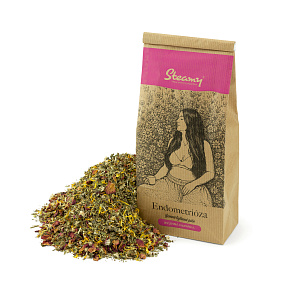
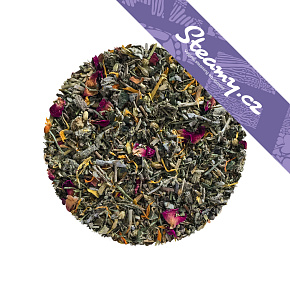
Our original blend is based on the pharmacognostic profile of the individual plants and findings from current research into their biologically active substances. Some of the plants included, or their natural constituents, have also been studied experimentally in relation to processes such as aseptic inflammation, oxidative stress and cell proliferation, which occur in endometriosis. Others have been studied in research focusing on tissue care, regeneration and comfort. The Endometriosis Relief blend contains carefully selected herbs whose effects I cannot write about, but I can refer you to herbal reference books and scientific studies that informed my formulation.
When creating the Endometriosis Relief blend, I focused on endometriosis symptoms such as painful periods, lower abdominal pain and painful intercourse. My intention was to create a blend full of fragrant essential oils that are released through steam and can create a pleasant, relaxing atmosphere, allowing women sitting over the steam to relax and, in turn, positively influence their emotional well-being.
I am well aware of how fragrant inner warmth can help in difficult moments, and how effective regular use of herbs can be for individual women,
I included common yarrow in the blend, a plant whose effects have been studied in experimental models of endometriosis. The research described the effect of the extract on the size of endometriotic lesions and also examined its possible effects on menstrual pain in women with endometriosis. https://pmc.ncbi.nlm.nih.gov/articles/PMC10418522/ and https://findtrial.co/trial/IRCT20160306026938N21 and https://pubmed.ncbi.nlm.nih.gov/26238568/
Oregano contains a range of biologically active substances, including carvacrol and rosmarinic acid. In 2025, carvacrol was studied experimentally in direct relation to endometriosis. In cell and animal models, it influenced certain processes associated with proliferation, inflammation and autophagy. It must be emphasised that the study tested isolated carvacrol, rather than an oregano infusion or oregano itself. https://pubmed.ncbi.nlm.nih.gov/40274729/
Common sage is rich in phenolic and aromatic compounds, among which rosmarinic acid stands out. This substance has also been examined in experimental research related to endometriosis, particularly for its effects on cell proliferation, oxidative stress and the size of endometriotic lesions. https://pubmed.ncbi.nlm.nih.gov/30446309/
I included calendula for its pharmacognostic profile and traditional use in tissue care. It contains mainly triterpenoids, flavonoids and other biologically active substances that are being studied in relation to inflammatory processes and tissue healing. A systematic review of experimental and clinical studies described favourable effects on the course of the inflammatory phase and the formation of granulation tissue in some models. https://pubmed.ncbi.nlm.nih.gov/31145533/
I selected common vervain for its traditional use in endometriosis, thanks to its wide range of biologically active substances, particularly iridoids, phenolic acids, flavonoids and terpenoids. Pharmacological research on vervain describes, among other things, the antioxidant and anti-inflammatory properties of its extracts and individual constituents. https://pubmed.ncbi.nlm.nih.gov/32937665/
I included daisy and rose in the blend for their feminine element and fragrance.
I must emphasise that some of the scientific research I considered concerns herbs consumed as teas, some concerns only isolated substances from herbs, and some was conducted solely in laboratory settings. Nevertheless, these studies were helpful when developing the formulation.
TCM and endometriosis
Traditional Chinese medicine identifies cold, which can enter the energy pathways through sitting on cold surfaces or exposure to draughts, as one of the causes of endometriosis. Other causes may include emotions such as frustration, dissatisfaction or non-acceptance of one’s femininity, or blood deficiency followed by stagnation, for example due to overwork or weakness after illness or childbirth. Contraception, which weakens the blood and causes blood stagnation, may also lead to the development of endometriosis.
The modern medical perspective
Modern medicine defines endometriosis as the growth of endometrium, meaning fragments of the lining of the uterine cavity, outside the uterus. During each menstrual period, the endometrium outside the uterus is influenced by female sex hormones. As a result, cyclic bleeding occurs wherever it is present, along with chronic inflammation, tissue scarring and possible adhesions.
Why is steaming so beneficial, and why should women with endometriosis experience it too?
While sitting over the warm steam, let your thoughts flow and turn your attention towards yourself. Relax.
Superficial warmth rising from below may help relieve pain and tension in the pelvic area. It supports circulation, relaxes muscles and influences the processing of pain signals. Current research confirms its potential as a supportive, non-invasive method for pelvic pain.
If you have any questions, write to me at monika@steamy.cz. I will be very happy to share my experience with you.

Mgr. Monika Valová