


Childbirth Preparation - pelvic steaming before childbirth
25. September 2024

As birth approaches, a woman may feel tension in her body caused partly by increased body weight and the expanding uterus pressing on other organs, and partly by her emotional state — in other words, fear of childbirth. Any method that brings relief during the final, demanding days of pregnancy is therefore welcome, especially if it is gentle and non-invasive, fragrant and pleasant, as well as inexpensive and easy to practise.
How does an at-home herbal sauna for your intimate area sound?
Several years ago, I introduced this practice to Czech and Slovak women under the name vaginal herbal steaming, reviving a tradition that had almost disappeared here. However, for it to gain acceptance in society, it needed the support of modern medicine — that is, healthcare professionals. In practice, this meant that my husband and I had to develop a modern approach and introduce it to gynaecologists and midwives. Explaining its benefits and possible uses was not an easy task. Since 2017, we at Steamy have worked hard to keep vaginal steaming from being overshadowed by an esoteric (yoni) cult that might claim this practical method of supporting women’s health for only a limited group of women. Our aim is not to divide women, but, through relevant information, case reports and cooperation with healthcare professionals, to enable all women to practise vaginal herbal steaming during stages of life when it could be of great benefit to them. Pregnancy is one such stage.
I recommend starting steaming as a form of preparation for birth no earlier than the 38th week of pregnancy.
In a healthy pregnancy progressing normally, there is no reason to steam earlier, for two closely connected reasons. The first is the psychological aspect of accepting childbirth as an approaching, inevitable event linked to the baby’s maturation in the uterus. Until the 38th week, a woman’s motivation is to keep her baby in her belly. From this point onwards, however, she faces the important task of symbolically unlocking the birth canal and mentally preparing for birth, which is always a profound encounter with life and death at the same moment. That is why we both look forward to it and dread it, and why we try to do everything possible to help it go as smoothly as possible. The essence, however, is to tune in, release tension and listen to your body. By regularly warming the birth canal, we can bring our awareness to the route through which our baby will enter the world. As we direct the warmth towards the birth canal, we show the baby the way out, while visualising the journey from the warmth of the uterus through the warm birth canal into the warm embrace of their mother. Steaming acts on the birth canal, softening it and making it more supple, which may also lead to the onset of labour.
In which cases can I steam before the 38th week of pregnancy?
You often ask whether you could start steaming a few weeks earlier, usually because your gynaecologist is recommending induction for various medical reasons. In these cases, steaming is possible after consulting your doctor. Earlier steaming, specifically from the 36th week, is also possible for women expecting twins or those preparing for a VBAC — a vaginal birth after a previous caesarean section.
How often can I steam?
From the 38th week, steaming is safe, and it is entirely up to you whether you enjoy it as an evening wellness ritual that helps you sleep, or combine it with perineal massage or making love, which is the most natural way of preparing the birth canal. Practise it at least 2–3 times a week. From the 39th week, I recommend steaming daily, and from the 40th week, even twice a day. Bear in mind that the due date is only an estimate and only a small percentage of women give birth on that day. Many more babies are born after their due date. In this context, it is worth remembering that a pregnancy is only considered post-term from the 42nd week.


Is steaming worthwhile if I am having a caesarean birth?
Vaginal herbal steaming is one of the methods used by women who take an active approach to preparing for birth. It does not matter whether they are preparing for a vaginal birth or a caesarean birth. Steaming is also beneficial in the case of a planned caesarean section, as it brings relief from painful ligaments supporting the uterus and helps the mother-to-be focus on her body. Although her baby will be born through her abdomen rather than vaginally, her body will still bring a child into the world and deserves attention. Regular steaming before birth also softens the soft tissues of the birth canal, through which lochia passes even after a caesarean section, and a cervix cared for before birth is better prepared for the postpartum clearing of the uterus.
What if my swab tested positive for group B streptococcus?
Being GBS-positive is not a contraindication to steaming. If your swab tested positive, we recommend adding one elderflower head to each dose of the Childbirth Preparation blend.
Can I steam if I have vulvovaginal varicose veins or haemorrhoids?
Vaginal herbal steaming should be experienced as a pleasant procedure that helps you relax on several levels. Therefore, if you have varicose veins or haemorrhoids during pregnancy caused by increased pressure on the pelvic floor, steaming requires a different approach from the usual one. Use gentler, cooler steam and a kneeling position, and after ten minutes, rinse your intimate area with lukewarm water to help the dilated blood vessels contract. Trust how you feel: you should not experience discomfort or pain. If this approach feels pleasant, you can repeat it until birth. If steaming does not feel pleasant, you can prepare a sitz bath using the Childbirth Preparation herbal blend. Both types of vascular conditions are temporary and usually disappear within a few weeks after birth.
Can I steam if I have a yeast infection?
The herbs in the Childbirth Preparation blend also help maintain balanced vaginal flora and resist unwanted bacteria and yeasts, which often trouble women during pregnancy. If you have a yeast infection before birth, steam for only ten minutes at a time using gentler steam, and afterwards rinse the vulva with lukewarm water to wash away the bacteria that have been flushed out. Ideally, allow your intimate area to air by wearing a long skirt without underwear, and reduce sugar, white flour and fried foods. Include fermented foods and apple cider vinegar in your diet — you can also add the vinegar to the steaming decoction, approximately 100 ml per 2 litres — and take probiotics and vitamin C.


Which herbal blend is best for preparing for childbirth?
Water vapour at a pleasant temperature touches the vulva, where it opens the pores, allowing active substances from the herbs to pass into the bloodstream through the permeability of the tissues. For this reason, only herbal blends formulated for a woman’s needs with consideration for her baby should be used in preparation for birth. Our preparatory blend, Childbirth Preparation, is specially designed to prepare the soft tissues of the birth canal: the cervix, pelvic floor muscles, vagina and external genital organs. The effects and safety of this blend have been tried and tested by several thousand women, which is also why it is widely recommended by doctors in gynaecology clinics and maternity hospitals. For labour itself, we recommend the Scented Childbirth herbal blend.

TIP: If an early birth means you do not finish using the blend before your baby arrives, you can use it after birth to support the clearing and regeneration of the uterus and the soft tissues of the birth canal, alongside the Postpartum Recovery blend.
And which herbs are in the blend?
Raspberry leaf, wild thyme, lavender and calendula.
Raspberry leaf is an herb rightly said to harmonise the female hormonal system and strengthen immunity. It is one of the few herbs that can be drunk over the long term without a break, and its flavour can help you maintain your fluid intake during pregnancy and the postpartum period. Not only does it help the birth canal prepare for birth, but it is also suitable for the baby in the womb and the newborn during breastfeeding. After birth, it reduces bleeding, speeds up uterine involution and helps the birth canal clear more quickly.
Wild thyme is a beautiful little plant traditionally said to refresh the pregnant woman’s soul and ease childbirth.
The scent of lavender is one of the most popular fragrances for childbirth. Lavender calms and reduces anxiety, which is exactly what we need during pregnancy and labour. It also has disinfectant properties.
Calendula acts against yeast infections, which, as I mentioned above, unfortunately often trouble pregnant women. Because yeasts damage tissue, their overgrowth may lead to greater injury during birth, which is why it is appropriate to take preventive steps against them.


TIP: Steaming also helps prevent injury before perineal massage and exercises with Aniball.
If a woman uses Aniball to prepare for birth, we recommend warming the perineum with steam before exercising with it to prevent minor injuries or abrasions that can occur during exercises with Aniball. Steam before perineal massage too, as the perineum becomes more supple after steaming, making the massage more pleasant.

If this article has not answered all your questions, contact me at monika@steamy.cz or any certified facilitator on our map. When visiting a maternity hospital, ask whether the staff know how to use steaming, so you can be sure you will be able to enjoy it during labour too, with the Scented Childbirth blend.
Finally, I would like to wish you a beautiful end to your pregnancy in a relaxed family atmosphere, connected with your baby and with your partner involved in all the household chores and preparations for birth. Please remember that vaginal herbal steaming does not guarantee a smooth birth without injury, but it can certainly offer gentle support through the final days of pregnancy and greatly contribute to your sense of well-being, which is the foundation for a flowing, natural birth.
And one last tip. If you plan to steam during labour and afterwards to support healing and the clearing of the uterus, you can buy all the herbs and necessary accessories at a discounted price in our birth package, which also includes affirmation cards by the best-known Czech midwife, Anička Kohutová.
With love

Mgr. Monika Valová
© All rights reserved, Steamy®.cz 2024, photography: Milada Brumovská

Code:
UC
100%
from
3.36 EUR
3.36EUR/1dose
In stock5+ks
 Favorite
 Compare
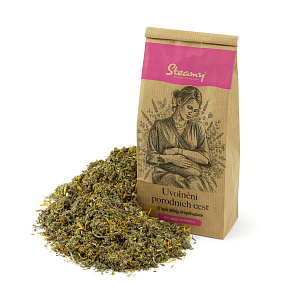
Herbal steaming blend for use before childbirth from the 38th week of pregnancy. Formulated by Mgr. Monika Valová, recommended by selected maternity hospitals. Packs of 1, 2, 6 and 12 doses.
Code:
VP
from
4.03 EUR
4.03EUR/1dose
In stock5+ks
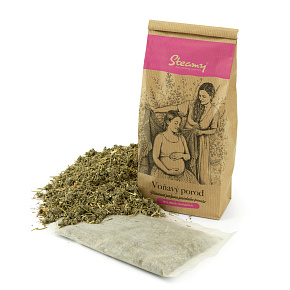
FavoriteCompareHerbal steaming blend for use during childbirth, created by midwife Anna Kohutová. Simply pour hot water over the herbal sachet – easy to use even in a maternity hospital.
Výhodné balení
Code:
PB
47.11 EUR
On request
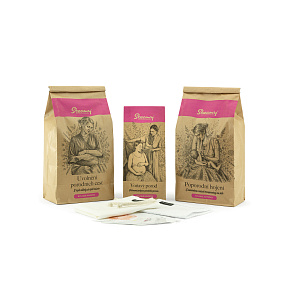
FavoriteCompareThe birth package contains herbs and aids for prenatal, birth and postnatal herbal yoni steaming.
 Free

Code:
GAZ
100%
111.81 EUR
In stock5+ks
FavoriteCompareFoldable Stool for Vaginal Steaming

Code:
PS
47.41 EUR
On request
FavoriteCompareShort cotton padding for the Gazelle chair or the Steamy seat.
Novinka

Code:
MAL
100%
10.13 EUR
In stock5+ks
FavoriteCompareHerbal single-species tea for internal use
Latest reviews

Another review

Stool Gazelle
100%
Vlasta M.
Verified customer

Childbirth Preparation – Herbal Steaming Before Childbirth
100%
Marcela P.
Verified customer
Childbirth Preparation – Herbal Steaming Before Childbirth
100%
Martina B.
Verified customer

Fertility support
100%
Drahomíra Š.
Verified customer

Gentle Period
100%
Drahomíra Š.
Verified customer

Relief for Gynecological Problems
100%
Jindřiška S.
Verified customer
Another review


