Updated 12 November 2026
It is my pleasure to introduce vaginal steaming in this article as a practice that has been part of women’s postpartum recovery for centuries in many places around the world, even though these cultures had no close relationship or shared roots. What connects these cultures is simply an understanding of the human body and the female soul, and a view of a peaceful postpartum period as essential preventive care for a woman’s future health, linked to a tradition proven by many generations of women.
Postpartum steaming can primarily be regarded as a preventive practice that supports faster and more effective recovery by improving blood circulation in the pelvic area, stimulating the uterus and providing an anti-inflammatory effect through the herbs it contains. Modern European women are unfamiliar with it and do not know how to support their bodies, weakened by childbirth, even in the simplest way, such as bed rest. There are two reasons for this. The first is the absence of traditional postpartum care, which used to be passed down as intergenerational wisdom between grandmothers, mothers and daughters, or was held by midwives, whom the legal framework prevented from providing this traditional service for women from the middle of the twentieth century onwards. The second is our society’s uncritical trust in modern medicine, which offers no support for postpartum care and focuses instead on addressing possible health problems after they arise.
In the context of the current boom in healthy lifestyles, the absence of postpartum care is glaring and illogical. I feel how important it is to return to knowledge that is several generations old and bring simple, logical skills back into our lives that can substantially improve everyone’s quality of life. In the spirit of the saying, “a happy mum, a happy child”. And, by extension, “a happy father”.
Steaming in traditional cultures, or why the body needs warmth to recover.
In traditional cultures, the postpartum period is also associated with “mother roasting”. This involves bringing warmth into the mother’s body and warming her, supporting skin-to-skin contact with the newborn, which among many peoples takes place near a fire or even above it. At the same time, the woman is ritually cleansed with smoke and protected from evil spirits that might threaten her body, which opened during labour to give birth to a child and slowly closes again during the postpartum period. As part of this care, women are commonly offered warm herbal teas, massages, sitz baths, moxibustion and various forms of herbal steaming.
Having experienced the benefits of postpartum steaming myself and regularly recommending it to women whom I support during childbirth and women who contact me for advice, I would like to share my experiences with you and introduce herbal steaming, when a few simple rules are followed, as a safe technique for postpartum healing and warming a woman’s body.
When can you start after childbirth?
There is no exact time to start steaming after childbirth. In a way, it is a practice that teaches a woman to observe her body, and when the lochia changes colour from red blood to brown and its intensity noticeably decreases, the right time has come to begin a course lasting ideally 30 days. Thirty days is an average. Some peoples steam every day for 21 consecutive days, others for as long as 90 days.
Since every woman is an individual, her body will also need a different amount of time for the uterine artery, which supplies the uterus with blood, to close. The important thing to know is that a woman must not be bleeding. It can also happen that you stop bleeding and fresh blood appears in the lochia again after steaming. In that case, make yourself raspberry leaf, nettle or lady’s mantle tea and lie down. It is a sign that your uterus is still weakened and needs to rest, and so do you. Give yourself a few days of rest, and if no more blood appears, you can resume steaming.
I will not recommend a particular day after childbirth on which to begin. If you are unsure, please write to me or consult one of the steaming practitioners in your area. You can find them on this map. You can also arrange a steaming session with these women or borrow equipment if you do not wish to buy your own.
!!! Important information for women who have given birth by caesarean section. You can begin steaming only after the first six weeks postpartum, for at least 14 consecutive days. If you start bleeding, the same recommendation applies to you as to women who have given birth vaginally.
How do you do it?
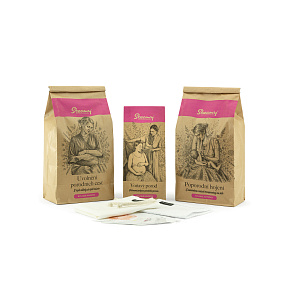
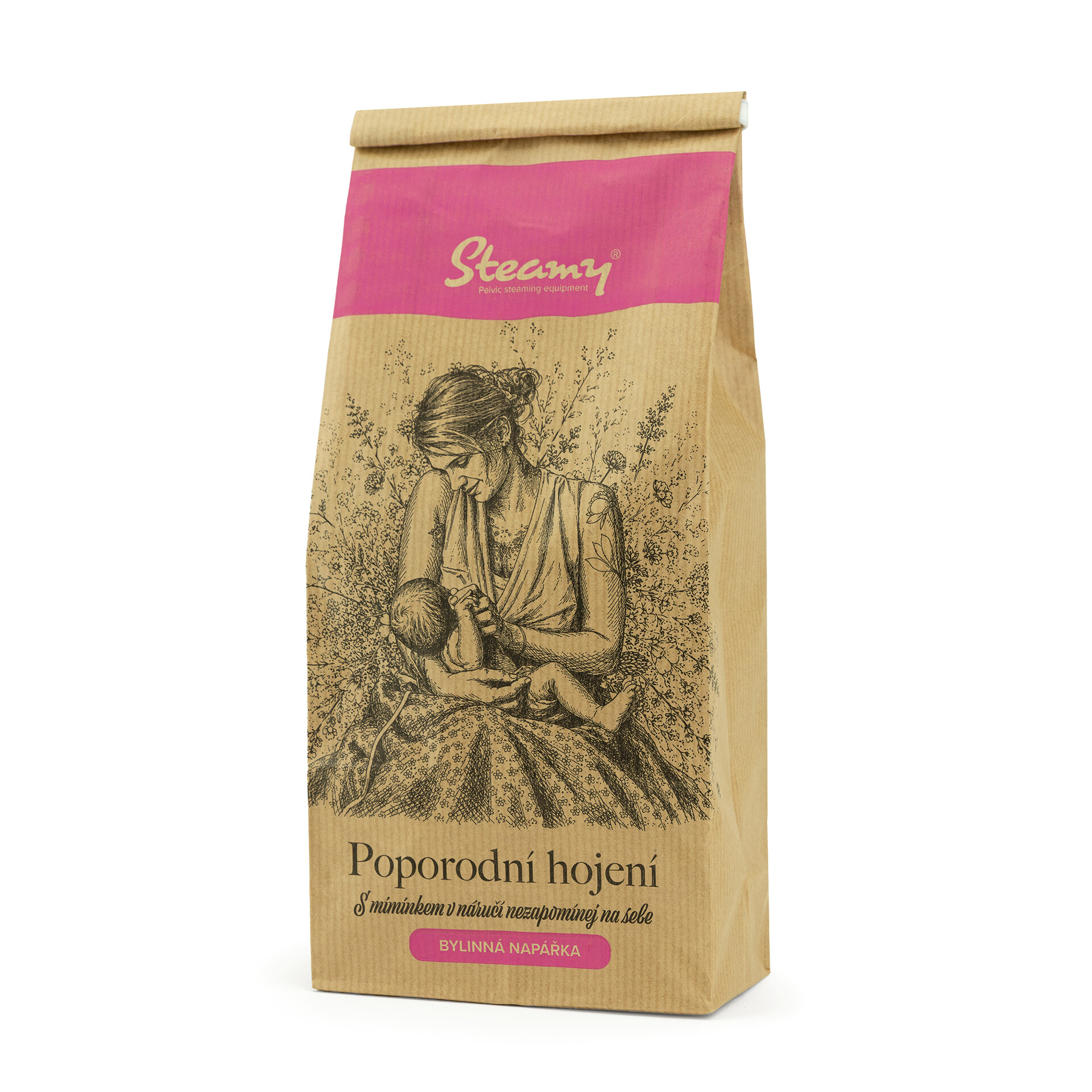
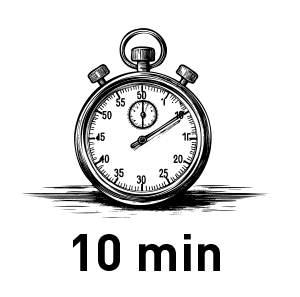
Place a handful (28 g) of the “Postpartum Recovery” herbal blend into a pot of boiling water and boil for 10 minutes so that the active substances from the herbs can enter the steam. Once it has cooled to a comfortable temperature, sit comfortably on your steaming equipment and let the warm steam work on your body.
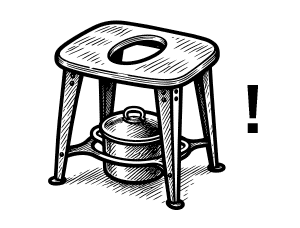
You can steam using equipment that you can buy at www.steamy.cz, borrow as mentioned above, or have your partner make for you. You can also use another alternative, such as a toilet bowl or a chair with an opening cut into it. However, it is always important to be cautious and pay attention to a comfortable temperature of the herbal decoction and the stability of the equipment you use. Do not forget blankets and warm socks.
You can find detailed instructions here.
Tip: You can pour water over one portion of herbs twice within 24 hours. Strain the herbs and keep them in a cool place until the next day.
Herbs suitable for postpartum steaming
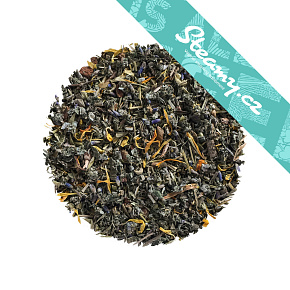
Herbs suitable for steaming are contained in the Postpartum Recovery blend and include:
- Raspberry leaf (Rubi idaei folium)
- Calendula (Calendulae flos)
- Lemon balm (Melissae herba)
- Sweet basil (Basilici herba)
- Oak bark (Quercus cortex)
- Agrimony (Agrimoniae herba)
- Shepherd’s purse (Bursae pastoris herba)
Other herbs you can use include stinging nettle, lady’s mantle and cabbage rose…
How long should a steaming session last?
If this is your first experience with steaming, if you gave birth before the 38th week of pregnancy, or if you suffered from vaginal infections during pregnancy, shorten the steaming session to 10 minutes. Otherwise, enjoy relaxation and warmth for 15–30 minutes.
There is one golden rule for steaming: short, regular sessions are more effective than one long session every now and then.
Contraindications
- Postpartum bleeding
- Fever
- The first six weeks after a caesarean section
- Vulvar varicose veins
- Low blood pressure
What are the benefits of vaginal herbal steaming in the postpartum period?
Steaming has its strongest effects during the postpartum period because the cervix is not yet fully closed and the body is recovering rapidly. Steaming helps you hold space for yourself and becomes a symbol of postpartum care. Through it, you learn to care for yourself regularly and set aside time to relax, which will also be useful in later stages of life when you can continue steaming, though no longer as intensively.
You can also read a study on vaginal steaming and the postpartum period at this link. This study was conducted by American Keli Garza and her team.
I will now describe some of the benefits and effects of postpartum steaming point by point.
1. Intensive exposure of the vulvovaginal area to steam and intensive pelvic warming increase blood circulation in the pelvic area and help complete the cleansing of the uterus, resulting in a shorter period of lochia discharge. In some tropical countries, rapid cooling is recommended after steaming, which is logical because the aim of the whole practice is not to overheat the body but to achieve a pleasant, healthy feeling in it. If this approach appeals to you, try it. Remember, however, that a short lukewarm shower should be followed by at least 40 minutes of resting in a warm bed.
2. Warm vapours full of active herbal substances help disinfect and heal birth injuries. Stitched tissue, birth injuries or scars are not contraindications. You do not need to wait until they have healed completely. Simply prepare a session with gentle steam and listen to how you feel. If you experience discomfort or burning, wait a few days before continuing to steam. Remember that steaming should primarily be a pleasant practice that teaches you to recognise your body’s needs.
3. As the uterus, nourished by blood, contracts more quickly, the time needed for uterine involution is also shortened, along with the associated pain. To support uterine involution, you can subsequently use the herbs boiled in the steaming decoction for herbal compresses, or tie the herbs into a herbal compress ball, boil it, sit over the steam and then massage yourself with the warm compress. Both options complement steaming very well.

4. Steaming stimulates the central nervous system and helps trigger oxytocin – the hormone of love, which influences lactation and the bond between mother and child, relieves anxiety and improves sleep. Scientists at a university in Ohio discovered how this stimulation occurs in 1986, when they found that stimulating the vagina, cervix and uterine walls stimulates the vagus nerve, which in turn helps increase oxytocin levels by up to 200%. Considering how sensitive the vagina and cervix are after childbirth, there is no better time to use warm water vapour than now. If a woman breastfeeds her baby during steaming, the let-down reflex is supported twice over. This means that steaming can be included among techniques that support breastfeeding.
5. After childbirth, women with anaemia are advised to take iron supplements, a side effect of which is constipation. Steaming helps very well with elimination, not only with bowel movements by supporting better intestinal peristalsis, but it also has a diuretic effect.
6. Steaming is a home steam sauna. It opens the pores and helps detoxify the body, gets the lymph moving and also has a positive effect on water retention, reduces vaginal swelling and helps the vagina return to its original state.
7. Steaming helps the labia and vagina contract.
8. Steaming supports the healing of haemorrhoids.
9. Steaming cares for and softens scars. Even those from previous births.
10. Steaming is a technique that has a preventive effect on the body and can therefore help prevent later gynaecological problems. This is one of the major benefits for which women around the world steam not only during the postpartum period but also regularly afterwards. (More in this article)
11. Intensive application of warmth affects the pelvic floor muscles and uterine ligaments and helps return the organs to their original positions.
12. Warmth brings about a state of calm, relaxation and emotional well-being.
13. Steaming lowers blood pressure.
What if I am still spotting after the first six weeks?
If lochia continues to be discharged after the first six weeks, continue steaming until the uterus finishes cleansing itself. If you start bleeding, stop. As I mentioned above, bleeding is a contraindication to steaming.
How can you bring your herbal postpartum period to a close?
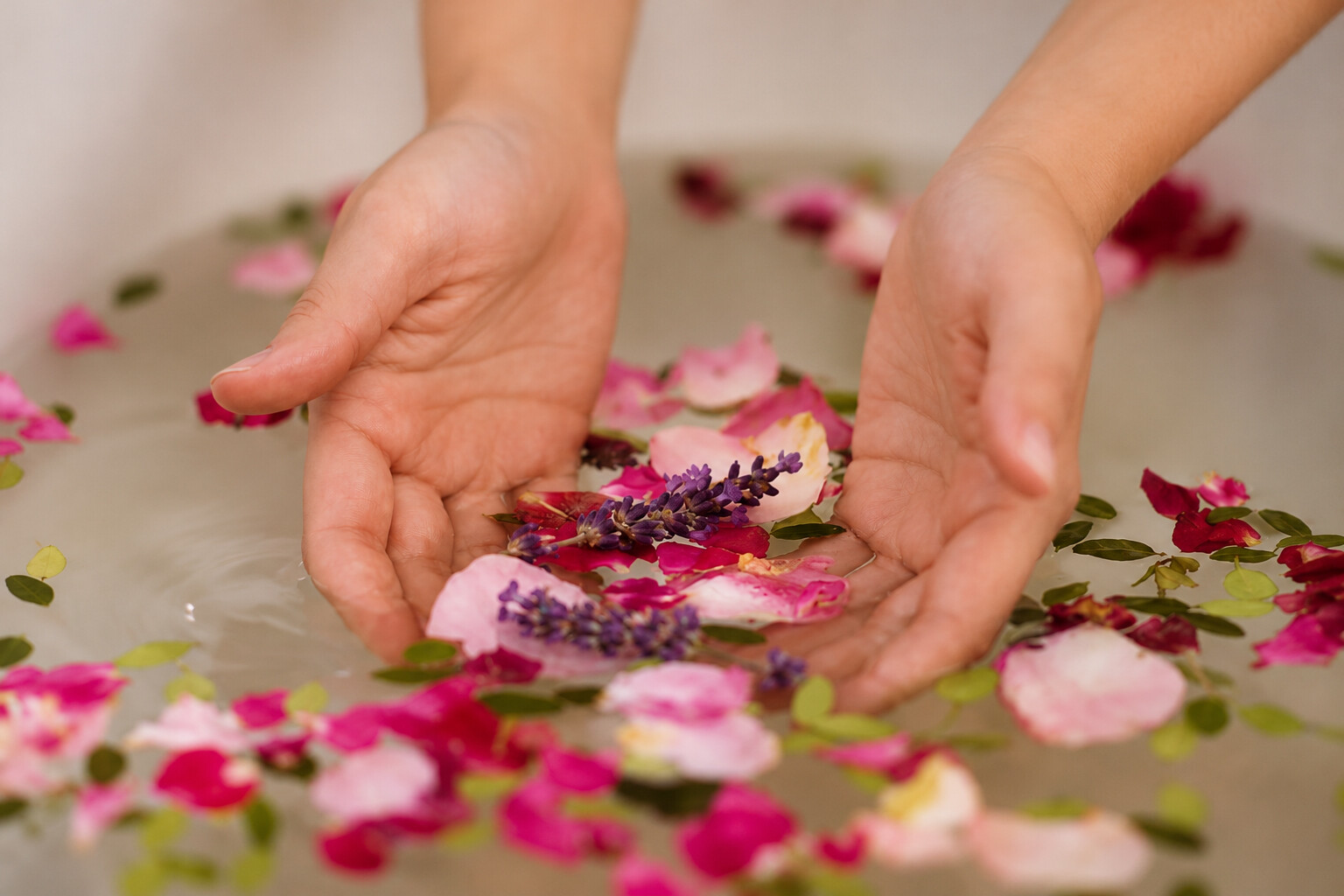
At the end of the first six weeks, enjoy a herbal bath together with your baby and add flowers you like. Rinse off, dry yourself and slowly, consciously step into life, strong, healthy and ready to face whatever it brings you.
For the bath, you can use the Postpartum Recovery blend, whose fragrance accompanied your steaming sessions throughout the postpartum period. After preparing the infusion, pour it into a bath of warm water, add your favourite flowers and enjoy a warm soak.
A few words to finish…
The postpartum period is a time of protection for mother and child. For 40 days, time stands still. Do not let anyone take this wonderful time away from you. Devote it to yourself and your child. Do not let yourself be pushed into activities that do not feel right, and enjoy the care offered by everyone who loves you. Do not feel lazy or unnecessary. Remember that a consciously experienced postpartum period, with the support of family and close friends, will give rise to a happy and contented woman, for whom this time will forever symbolise the care and love she can continue to pass on to others throughout her life.
If you have decided to use steaming during your postpartum period, I would be very grateful if, once it is over, you shared your experience with me and wrote to monika@steamy.cz. I would also be very happy if you shared your experience with your gynaecologist or midwife and helped me raise awareness of this beautiful technique among healthcare professionals.
Thank you…
With love

Mgr. Monika Valová
© All rights reserved, Steamy®.cz 2026, photography: Adéla Friesová
Remember to think about your regular cleansing routine once the first six weeks are over. https://www.steamy.cz/post/jak-zenska-bylinna-naparka-pusobi-na-zenske-telo-i-dusi
PS: Feel free to share and circulate this text, but always include a full link to this website and credit me as the author. Thank you.
Vaginal herbal steaming does not replace medical care and is a supportive practice in caring for women’s health.