


Scented Childbirth – Herbal Steaming During Labor
21. January 2025

What comes to mind when you hear the words “scented childbirth”? For me, it is the fragrance of herbs, a kind midwife carrying boiled water into the birthing room, a doula pouring it into a pot prepared beneath the steaming stool, and then the feeling of warmth spreading inside the body, opening the birth canal so the baby can finally come out. That is exactly what steaming during labour is like… warming and caring, calming, showing the baby the way from the warm safety of the uterus into their mother’s warm embrace. This can also be part of visualising your birth beforehand if you use steaming in your preparation for birth.
Perhaps this image feels familiar because you already know vaginal herbal steaming as Periodic Cleanse, or as a supportive method from the time when you were trying to conceive. And if you did not know how helpful pelvic warming can be during labour, I recommend reading on so that you can ask for it at your maternity hospital. Although I believe the best hospitals will offer it themselves, as vaginal herbal steaming has become firmly established in maternity hospitals over the past few years thanks to its simplicity and effectiveness.
Since 2018, we at Steamy have trained staff at several dozen maternity hospitals in the Czech Republic and Slovakia, enabling healthcare professionals not only to use this technique but also to develop confidence in it. It is only thanks to safe equipment, which we continually develop and refine, tried-and-tested herbal blends and correct procedures that steaming during labour is safe, comfortable and meaningful. And, unlike in the rest of the world, it is officially and actively used in maternity hospitals in the Czech Republic and Slovakia.
Doulas and midwives who attended our workshops, or with whom we cooperate in training maternity hospital staff, have helped make this happen. With their help, awareness of steaming spread further among women, who began including it in their preparation for birth and in their postpartum recovery. All practitioners trained under the Steamy name are familiar with using pelvic steaming during labour too. They emphasise safety based on knowledge of the full steaming procedure, as professional care for women requires.


Why enjoy pelvic warming during labour?
Because childbirth is precisely a process during which women lose a great deal of warmth and energy. Providing warmth increases comfort, allowing the nervous and hormonal systems to work in harmony with the needs of the labouring woman, who should not experience any greater discomfort than labour itself. In other words, everyone involved in the birth tries to help the woman feel comfortable. A warm touch and kind words, complemented by warm steam, can create an atmosphere of trust in which the labouring woman can turn inwards, feel her body and feel safe.
Over the warm, fragrant steam, you can imagine your cervix opening, soft and supple under the influence of warmth. Visualise your baby slipping it over their head like a little crown. The birth canal is warm and soft, and your baby is travelling outwards from the warmth of the uterus.
The warm steam itself also helps soften the tissues of the perineum, making them more supple and elastic. After all, midwives warm the perineum during birth to achieve the same effects.
At what stage of labour is steaming suitable?
You can enjoy steaming whenever you feel a need for warmth and relaxation during labour. The midwife and doula accompanying you can recognise the right moment to offer it. You can also enjoy it yourself at home at the beginning of the first stage of labour, when contractions come only occasionally. At this point, steaming, like a bath, can help you tell whether this is already “it” or whether you are experiencing practice contractions. Steaming is also a welcome companion when contractions in the first stage are too frequent and ineffective, leaving the woman insufficient time to rest. Its effect at this point is that the pace slows down over the steam. It can also be used if the body takes a break and labour pauses for a while. A trained healthcare professional or doula will know more detailed applications, which are beyond the scope of this article.
Is your waters breaking a contraindication?
No, waters breaking before labour is not a contraindication. You do not need to be afraid to use steaming after your waters have broken. If you wrap yourself in a blanket or sheet, remember that during pregnancy and labour, the wrapping goes below the belly so that the baby in the uterus does not overheat. If you use our professional equipment with the long Softness padding, you do not need to wrap yourself in a blanket or sheet at all. Instead, enjoy the freedom to move, stand up during a contraction and sit down again afterwards as you need. While standing, simply cover the opening in the stool with a towel or something similar.
Which herbs should you use during labour?
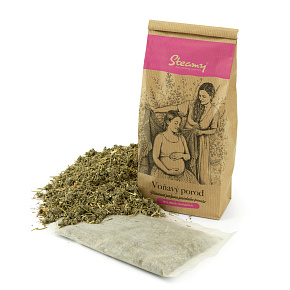
Together with midwife Anna Kohutová, we have prepared her original Scented Childbirth blend for you, made from raspberry leaf, wild thyme, shepherd’s purse, rosemary and common vervain. This blend is unique in having been tested over the long term in maternity hospitals that have been sourcing it from us for several years, which is also why we know that it does not cause any adverse side effects. We have made this blend into a soft, fragrant herbal cushion using Pegatex nonwoven fabric, which greatly simplifies steaming during labour. After steaming, the cushion can also be placed inside a wash mitt and used to protect the perineum during the second stage of labour. Before that, it can be used without the mitt as a lower-back compress or for a full-body massage in the shower.


How is steaming prepared in hospital?
In the maternity hospital, the Scented Childbirth herbal sachet is not boiled. Hot water is poured over it, which differs from preparing steaming at home before or after birth. There is a reason for this, just as there is for the height of our steaming equipment, whose design allows the woman to sit down immediately without waiting for the infusion to cool. During labour, it is essential to use steaming when the woman wants it or her support person considers it necessary. Once cooled, the herbal sachet can be used again for a second infusion.

Can I use up the Childbirth Preparation herbal blend left over from my preparation for birth?
Yes, you can. Ideally in the early stages of labour, or after birth, alternating with the Postpartum Recovery blend.
What if my chosen maternity hospital does not offer steaming or have a steaming stool, but I would still like to steam during labour?
Have you already asked about steaming during your hospital tour and been told they do not use it? Try recommending our website to the head nurse or ward nurse!!! :) Then arrange with your doula for her to provide the herbs and stool. If you are not considering having a doula at your birth, you can borrow steaming equipment from certified vaginal herbal steaming practitioners who offer a rental service. Or get your own stool and include steaming in your regular cleansing routine after birth too.
Some hospitals, on the other hand, have only the equipment but do not stock the Scented Childbirth herbal blend, which you can order from us before birth, together with a wash mitt for protecting the perineum.
Are there any medical contraindications that would prevent me from steaming during labour?
Because steaming during labour is a one-off procedure, it can also be enjoyed by women who otherwise suffer from gynaecological inflammation or herpes, provided these are not in an active phase. If you have problems with vulvovaginal varicose veins or haemorrhoids during pregnancy, we recommend steaming during labour only if you have already tried it in your preparation for birth and did not experience pain during or after it. If you are bleeding during labour, let healthcare professionals assess its suitability in light of the cause of the bleeding.
By contrast, a positive test for group B streptococcus, hypertension, gestational diabetes, anaemia, waters breaking, a blood-clotting disorder or taking blood-thinning medication are not contraindications.


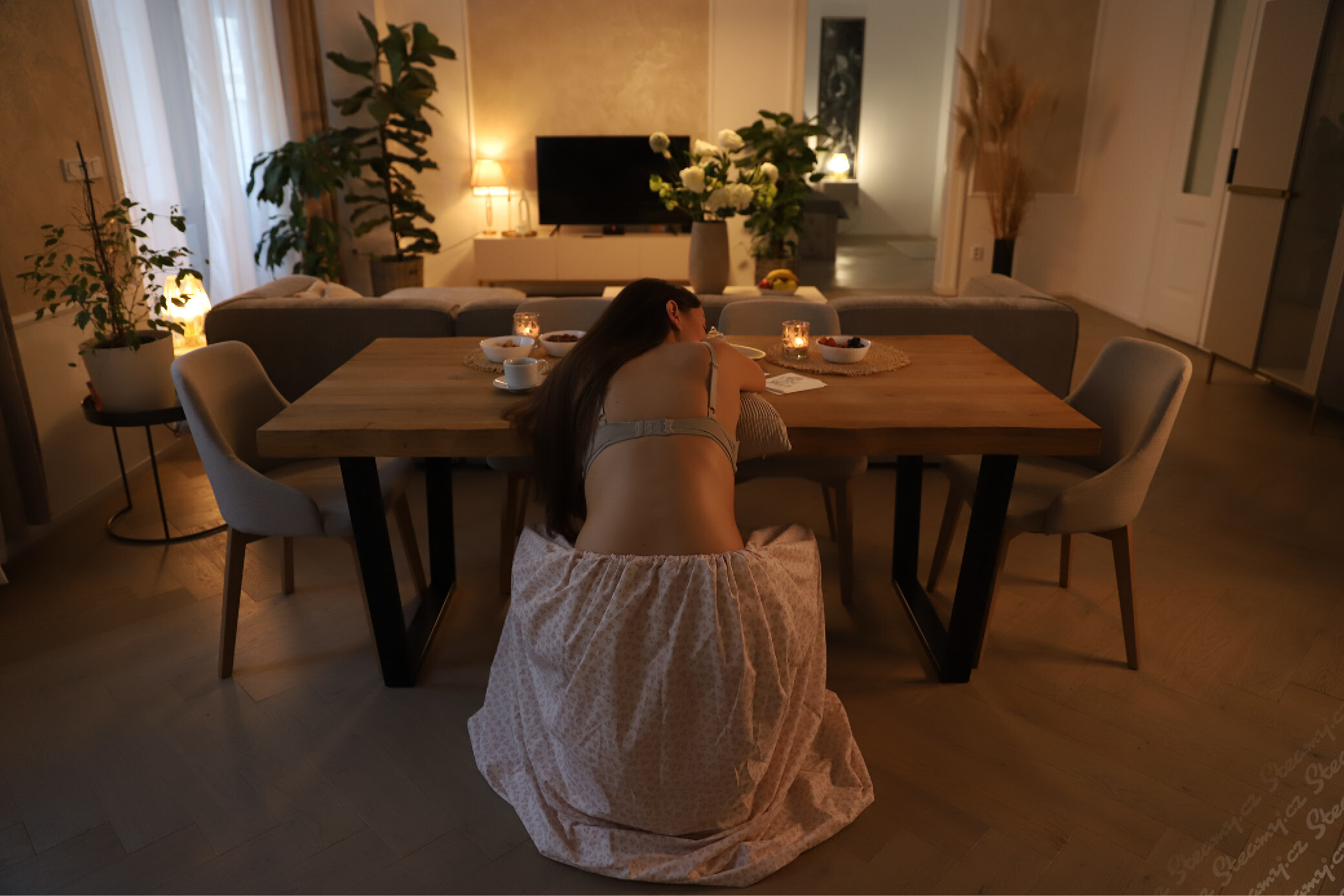
What can it look like in practice? A few case studies…
We thought it would be helpful to share some examples from practice in which steaming played an important role during labour. We therefore approached independent midwife Martina Lukács, who says she has had only the best experiences with steaming among her clients.
The first case Martina shared with us involved a first-time mother who was very afraid of childbirth. Martina only met her towards the end of her pregnancy, so she tried to do everything she could to help her relax a little and begin to trust herself. The woman was also reportedly very tense, which is common among this type of mother (author’s note). Labour began at term, at around 7.30 pm, when the client called Martina to say that something was happening. She wanted to leave for the maternity hospital immediately, as she was afraid to stay at home. Within an hour, they met in the delivery room. Martina massaged her lower back and offered herbal steaming. The client agreed. She enjoyed the steaming, but after about 40 minutes she began to feel that she needed to vomit. She said it was making her gag, but Martina recognised the Ferguson reflex. At around 11 pm, she gave birth to her beautiful first baby.
The second birth story again involved a very anxious woman, 37+, frightened and giving birth for the first time. She contacted Martina, her midwife, in the early morning to say that her waters had broken. Contractions had not yet started, but because Martina’s morning shift at Vsetín maternity hospital was due to begin a few hours later, she arranged to meet the client in the delivery room so that she could already begin caring for her. They met at 6 am. The woman was experiencing only mild waves in her lower abdomen. The doctor examined her and said it would probably take a long time, as the cervix had not effaced and barely admitted a fingertip. Martina settled the woman in a room and offered herbal steaming. Beforehand, she massaged her sacrum and gently warmed her lower abdomen. The woman requested an enema. She began steaming at around 8.30 am. After half an hour, the contractions started to intensify, and a little later she felt unusual pressure on her rectum. It flashed through Martina’s mind that the birth canal might already be fully open, although she could hardly believe it after such a short time. But it was — what a surprise! This stressed and frightened woman relaxed so beautifully during steaming that she gave birth to her first child within an hour and a half of starting.
A few final words and wishes for a beautiful, wonderful, fragrant birth…
On behalf of the whole Steamy team, I wish you a beautiful, flowing and fully experienced birth, with a healthy baby at the end. That is, after all, why we have been doing this educational work among healthcare professionals and the public for several years. But I also wish that your self-care does not end with birth, as it often does in our part of the world, and that you remain connected with your body afterwards and feel the need for attention and care just as you did during pregnancy. Sometimes, with the release of postpartum endorphins and the cycle of caring for a baby, we do not realise how vulnerable we are after birth, or that a wound the size of the placenta is healing in the uterus. We should support this healing with bed rest, massages, regularly drinking raspberry leaf tea and, once you have stopped bleeding, with postpartum steaming, which helps not only with healing and clearing but also supports lactation and the completion of uterine involution.
If you have a question this article has not answered, you can contact me by email at monika@steamy.cz
With love

Mgr. Monika Valová
PS: Feel free to share and circulate the link to this article, but always include a full link to our website and credit the author. Thank you…
Vaginal herbal steaming does not replace medical care and is a supportive procedure in women’s healthcare.
© All rights reserved, Steamy®.cz 2025, photography: Milada Brumovská

Code:
VP
from
4.03 EUR
4.03EUR/1dose
In stock5+ks
 Favorite
 Compare
Herbal steaming blend for use during childbirth, created by midwife Anna Kohutová. Simply pour hot water over the herbal sachet – easy to use even in a maternity hospital.
Výhodné balení
Code:
PB
47.03 EUR
On request
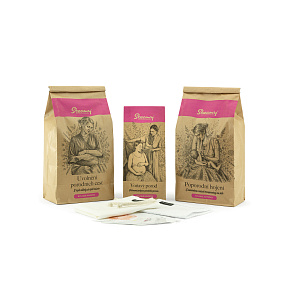
FavoriteCompareThe birth package contains herbs and aids for prenatal, birth and postnatal herbal yoni steaming.
 Free

Code:
GAZ
100%
111.63 EUR
In stock5+ks
FavoriteCompareFoldable Stool for Vaginal Steaming

Code:
NP
from
43.95 EUR
In stock5+ks
FavoriteCompareA practical accessory for the herbal steaming in beautiful patterns.


Code:
MOC100
23.01 EUR
In stock5+ks
FavoriteCompareBody cream for the abdomen after childbirth to firm and smooth the skin.
Novinka

Code:
MAL
100%
10.12 EUR
In stock5+ks
FavoriteCompareHerbal single-species tea for internal use
Latest reviews

Another review

Stool Gazelle
100%
Vlasta M.
Verified customer

Childbirth Preparation – Herbal Steaming Before Childbirth
100%
Marcela P.
Verified customer
Childbirth Preparation – Herbal Steaming Before Childbirth
100%
Martina B.
Verified customer

Fertility support
100%
Drahomíra Š.
Verified customer

Gentle Period
100%
Drahomíra Š.
Verified customer

Relief for Gynecological Problems
100%
Jindřiška S.
Verified customer
Another review


